
For months before I arrived in Spain, I had been searching for a man named Manuel Carrerá. He had been dead for more than two hundred years. This turned out to be less of an obstacle than you might imagine.
He had lived in the Basque Country sometime in the seventeenth century. At some point he crossed the Atlantic. I don't know what he was running toward or away from but he became one link in a long chain of migrations and survivals that eventually, through routes I am still only beginning to trace, led to me.
What began as curiosity slowly became something closer to obsession. I contacted archives in three countries. I waited, with an impatience I found embarrassing in myself, for records to arrive. When they did, each one triggered a surge of excitement wildly disproportionate to the information it contained. A baptism record. A church ledger. A faded photocopy stamped by a diocesan archive. I became, strangely good at deciphering centuries-old handwriting. It is a superpower! And I love studying the loops and descenders of some long-dead parish clerk. Would intimacy with the script become intimacy with the life behind it?
I told myself I was searching for a person. What I was actually searching for, I would not begin to understand until I was wet, cold, and ugly-crying (truly ugly: snot, the whole situation) on a mountain in the Pyrenees.
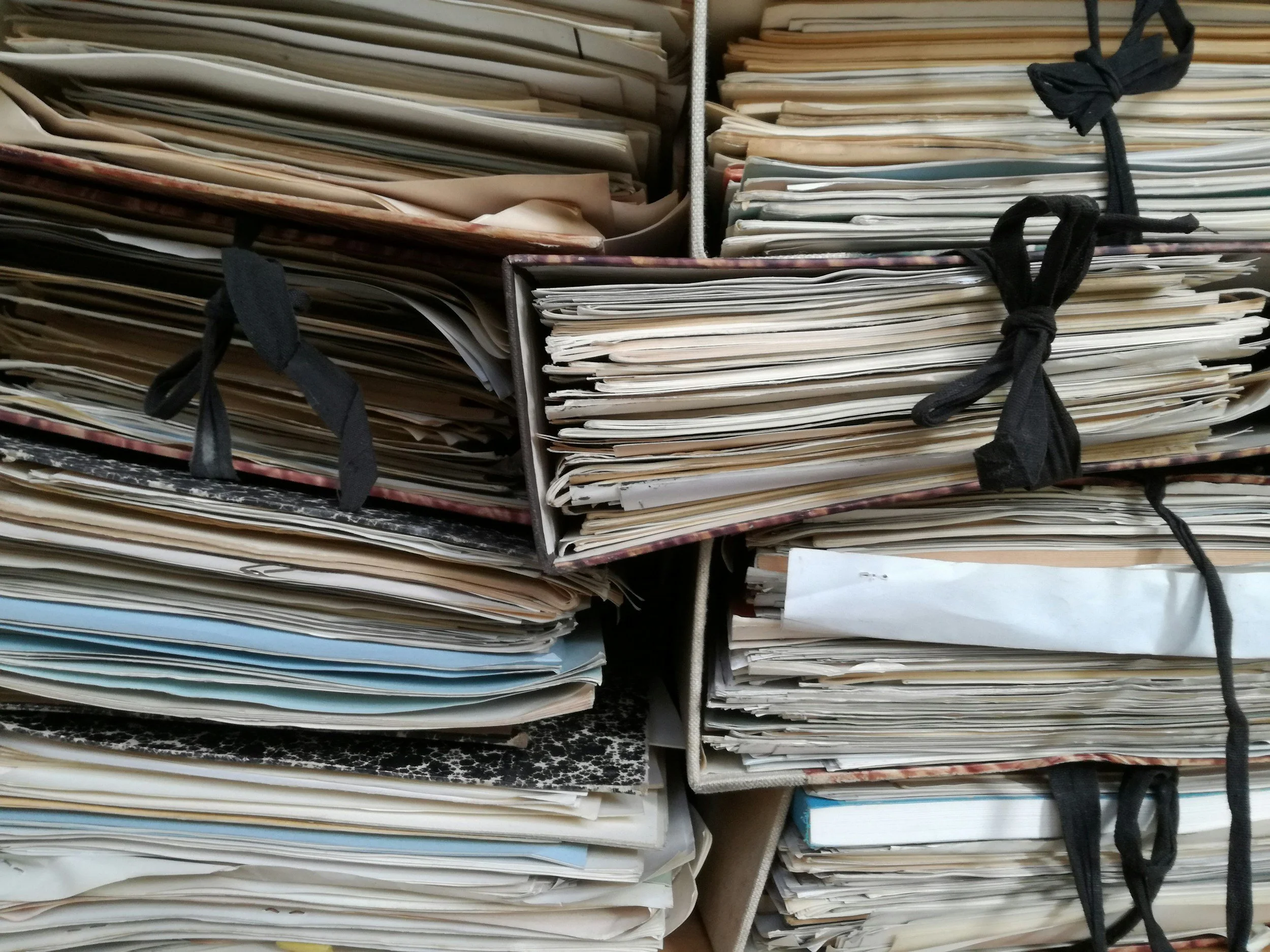
The archive is where many of us begin, including me. Parish records, census data, immigration manifests, land deeds, the bureaucratic residue of lives that leave a paper trail. For those of us with ancestors who were documented, whose existence was recorded by the church, or the state, or some other apparatus of empire, the archive offers something remarkable: a loose thread hanging from the fabric of time. Tug gently enough and an entire life begins to move.
I am deeply grateful for what the archive gave me. It told me where Manuel was baptized. It told me who his parents were. It preserved signatures, dates, church records, administrative traces left behind by the Catholic Church. It gave me the outline of a life with a precision that still astonishes me. That the baptism of a child in a small Basque village in the 1700s would leave a mark legible to one of his distant descendants, standing in a different century! Amazes me.
But here is what I also know: the archive is not equally available to everyone.
Whose records got kept is a political question. Every archive is also a record of forgetting. The same systems that generated documentation for some people worked, for others, to destroy it. Enslaved people. Indigenous communities. People whose names were changed at borders, whose languages were suppressed, whose villages were burned. The archive is not a neutral repository of the past. It is an artifact of power which means that for many people, the thread simply isn't there. The paper trail ends, or was never started, or was deliberately severed.
This matters for how we think about relationship. Because if the archive were the only path to our ancestors, then relationship itself would be a privilege distributed along the same lines as every other privilege. And I don't believe that's true. Or rather: I have come to believe, through my own experience that the archive is one path and not always the most important one.
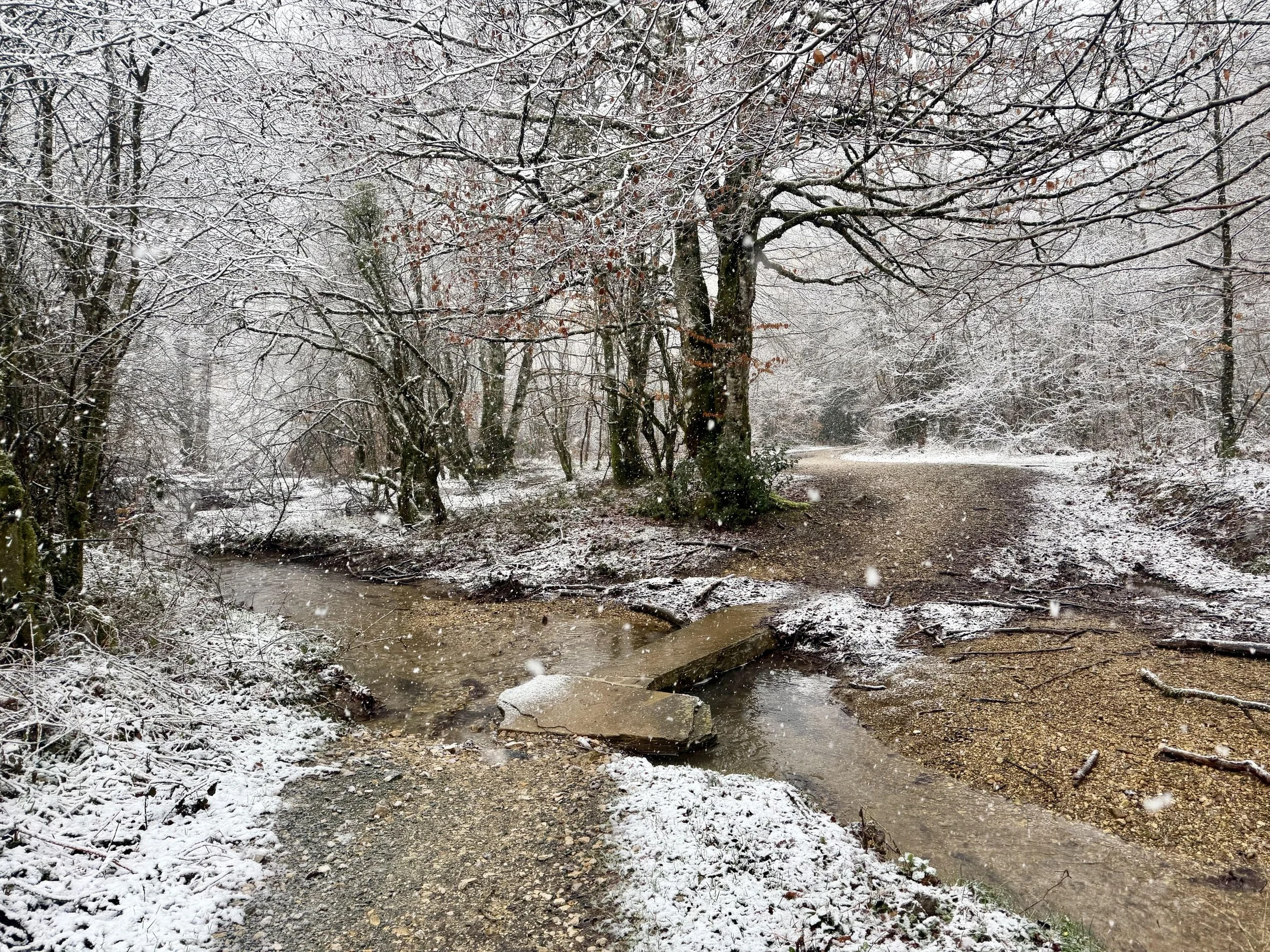
Somewhere in the Pyrenees
The Camino begins, if you walk the French route, with a crossing of the Pyrenees so demanding it functions as a kind of initiation. You go up and up into cloud and cold, and then you come down on the other side, and by the time you reach the valley you are a different kind of tired than you were before. Snow fell the morning I crossed, turning to rain sometime after noon. My shoes had been wet for hours. Every step made a sucking sound in the mud. Thorn canes scratched against my legs as I passed. The backpack straps dug into my shoulders.
And I was carrying far more than what was in the backpack.
The archive never could have given me this. What the mountain gave me arrived through the body. The land. The physical fact of being in a place where they were, breathing air that moves through the same geography, walking paths that have existed for centuries.
There is something that happens in the body on the Camino that I don't know how to fully account for. The mountain strips away the story you've been telling about yourself. When you are cold and exhausted and the only task in the world is to keep moving, the mind runs out of room for its usual performances. What's left is something more essential.
What arrived for me, somewhere in the freezing rain, was not a vision. It was a tenderness. Directed at myself, unusual already. For years I had been running a sustained internal accounting of all the ways the person I had actually become had failed to resemble the person I thought I should have been. The mountain did not argue with this. It simply made it impossible to maintain. You are too wet and too tired and too cold to sustain a story about your own inadequacy.
You are a good person. You survived. You carry things that are not yours to carry.
The words came out through my mouth, but out of my ancestor. I felt his inflection. Standing in the sleet, crossing mountains my ancestor may have known, I felt something I can only call mercy arrive and I found myself wondering, for the first time, whether looking backward at the people who made you might also teach you something about how to look at yourself.
This is not a thought I arrived at through research.
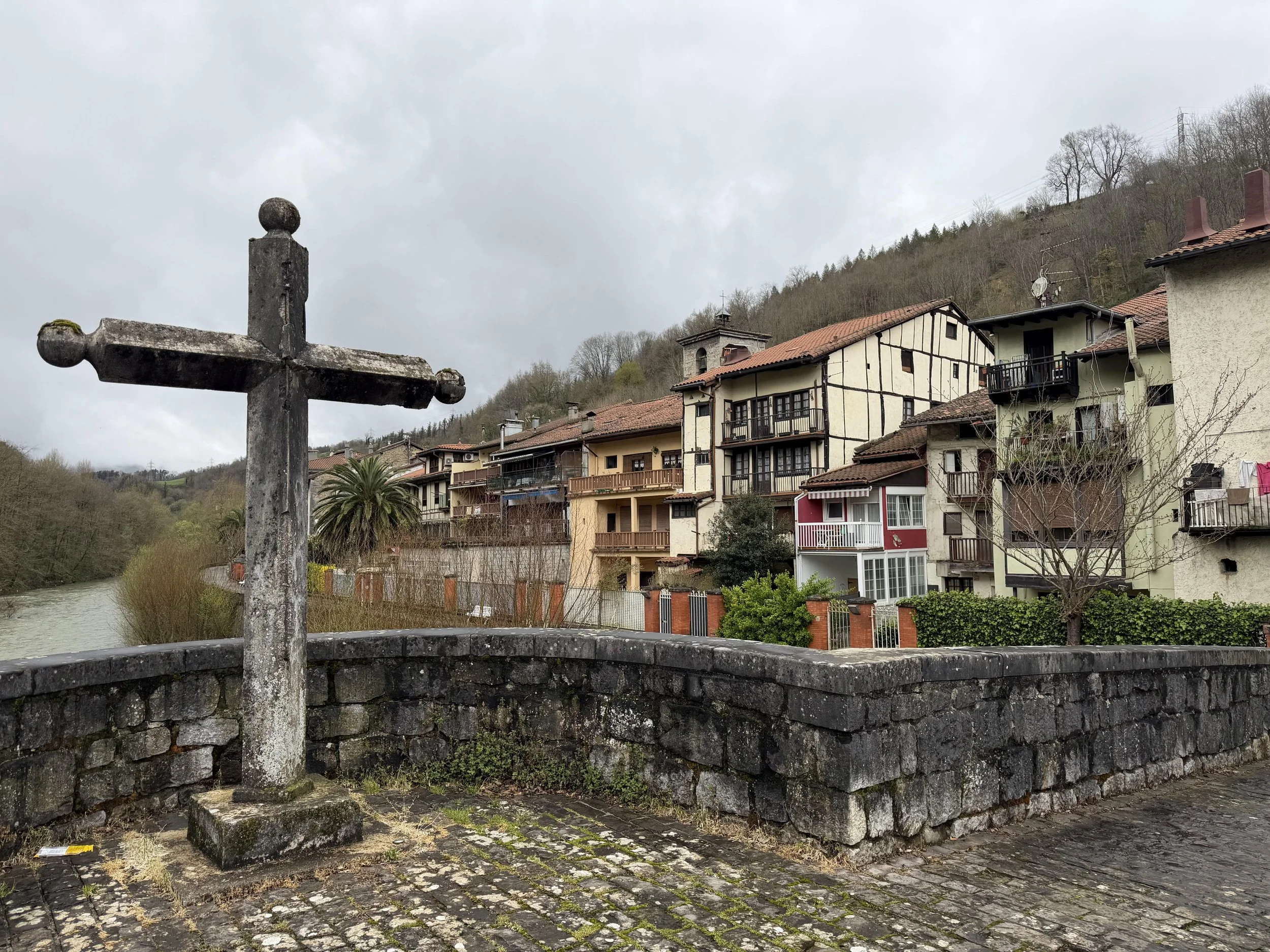
Alegia, Oria River, Basque Country
A few days later, I arrived in the region where Manuel had lived.
I knew quite a lot by then. I knew the names, the dates, the records, the shape of his documented life. I had read the archive so many times I could reconstruct fragments from memory. I knew this place the way you know a city you've studied but never visited.
What I was not prepared for was the third path into relationship with ancestors: recognition.
Something in me responded to this landscape before my mind could explain why. I stood on a narrow village street slick with rain and felt something move through me I can only describe as oh. I found it in doorways, in the way church towers rose above tiled rooftops, in a window box overflowing with flowers. I kept slowing down to look at things I had no obvious reason to look at, feeling something stir beneath thought. And then I was sobbing openly, in the middle of the street.
None of it looked anything like Puerto Rico, where I'm from. The forests were different. The weather was different, grey and cool where I was raised in heat. There was no logical reason for my nervous system to register this place as familiar.
And yet it did.
I hesitate to call this ancestral memory, because the phrase carries a certainty I can't honestly claim. I cannot prove that recognition is heritable. I cannot prove that a fondness for stone houses travels through bloodlines. What I can say is that I felt something, that it was real, and that it arrived not through information but through presence. Through the act of simply being in a place and letting it meet me.
The feeling came again beside the River Oria, the river that wound through Manuel's life, that he must have seen every day, that is still there, still moving fast over dark stones as if centuries are nothing. I watched the water and felt the strange doubling of standing somewhere both utterly unfamiliar and, in some way I cannot account for, already known.
The archive had not prepared me for this. The archive could not have.
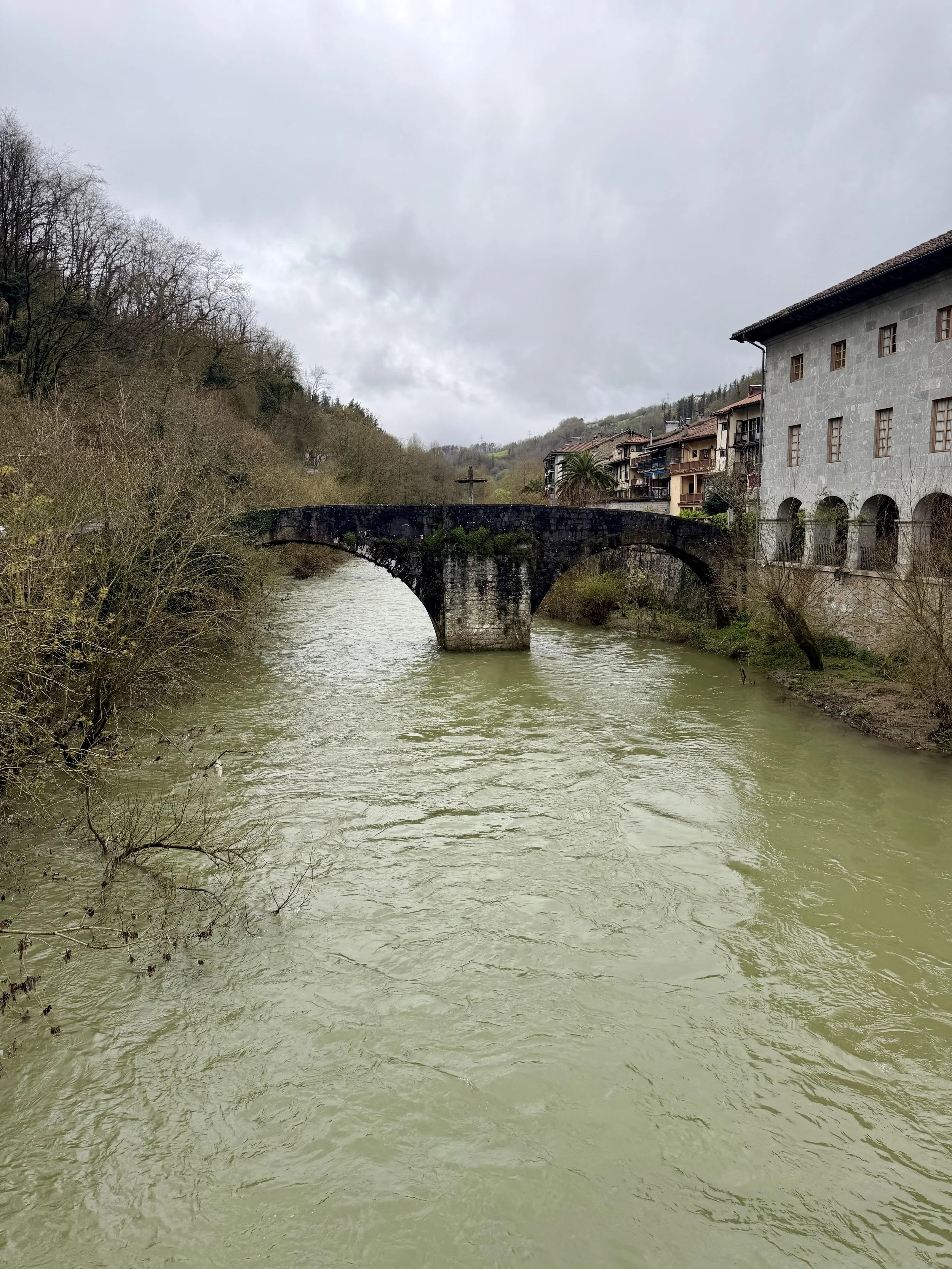
Alegia, Oria River, Basque Country
When we enter into relationship with our ancestors, what do we do with what we find?
Because the ancestors we discover are not always the ones we were hoping for. And the histories they inhabited are rarely clean.
Manuel Carrerá was Basque, from a region with its own complex relationship to Spanish empire. He crossed to the Americas at a time when that crossing meant participation in a colonial project. I am from Puerto Rico, an island shaped by extraction, displacement, conquest, and resistance. I am, in my bones, the descendant of the colonized.
And I am also, it turns out, the descendant of someone who crossed from the colonizing side of the ocean. This tension does not resolve.
The more I learned about Basque history, the less simple Manuel became. His people had spent centuries preserving their language, customs, and forms of self-rule while larger powers rose and fell around them. They knew something about what it meant to resist absorption. They knew something about surviving empire. And yet Manuel crossed an ocean as part of an imperial project. I found myself wondering how both things could be true at once.
It would be comforting to imagine that people who have experienced domination are somehow protected from participating in the domination of others. History offers little evidence for this. Again and again, individuals and entire cultures move between positions of power and vulnerability. We resist one hierarchy while benefiting from another. We defend our own people while failing to recognize the humanity of someone else.
The contradiction disturbed me because it felt familiar. The longer I sat with it, the less interested I became in deciding whether Manuel belonged on the right side of history. What interested me instead was the contradiction. How a people could struggle to preserve their own identity while participating in the dispossession of others. How suffering does not necessarily produce wisdom, and how none of us stand entirely outside the systems that shape us.
What I want to offer instead is this: relationship is not the same as reverence. To enter into relationship with an ancestor does not mean idealizing them, excusing them, or deciding their context made everything acceptable. It also does not mean simply condemning them. That is its own kind of distance, its own way of not really looking. Relationship requires something harder than either. It requires a willingness to encounter them as human beings. Complicated, limited, fully human beings who did not know they were our ancestors, who were embedded in systems they may not have fully seen, who were, like all of us, capable of tenderness and harm, courage and cowardice, love and complicity, often in the same lifetime.
The older I get, the less interested I become in innocence, my ancestors' or my own. What I want is something harder and more sustaining than innocence. I want relationship. And relationship is not only something we feel. It is something we do. The question is what becomes possible when we know who our ancestors were. What responsibilities emerge? What patterns do we continue and which ones do we interrupt? What stories do we choose to carry forward? Relationship changes the shape of the present. Otherwise it is only information.
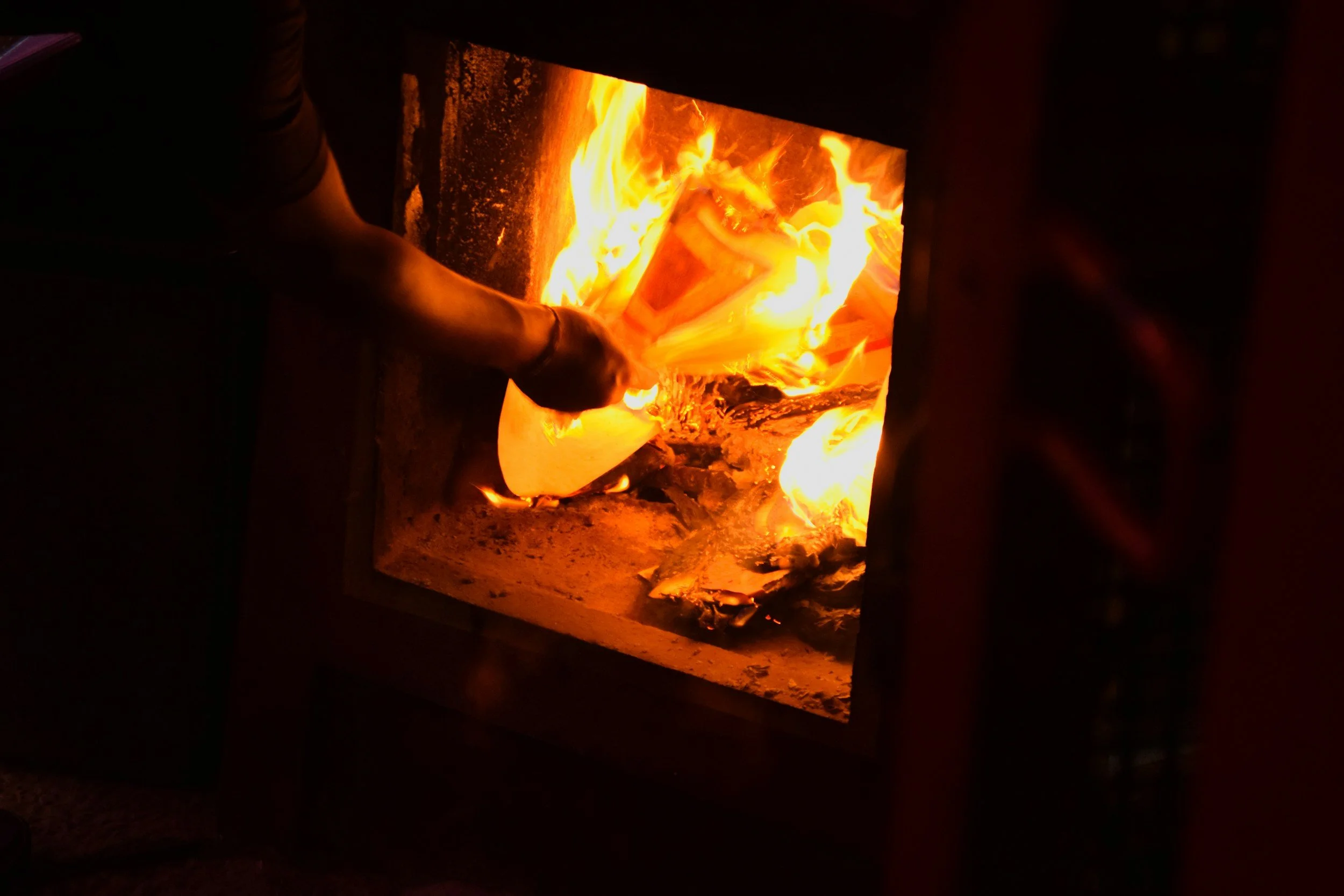
So: how do we enter into relationship with our ancestors?
Through the archive, when we have access to one: gratefully, critically, knowing what it can and cannot give us.
Through the body and the land: by going to places they knew, or simply by paying attention to the way certain things resonate in us without explanation.
Through stories: the ones that got passed down and the ones that didn't, the mythologies and traditions
Through imagination: the disciplined, empathetic act of trying to picture what it was like to be them, inside the specific world they inhabited.
Through accountability: the willingness to sit with what they did, what was done to them, and what we inherited from both.
Through participation: recognizing that ancestry is not only about looking backward but also about deciding what continues through us. Every generation inherits unfinished stories. Some we extend, some we repair and some we outright refuse. We become ancestors ourselves through the choices we make with what was handed to us.
And perhaps most of all: through the questions that refuse to leave us alone. The fixation that starts as curiosity and becomes something you can't put down. The ancestor whose name you keep returning to, for reasons you don't fully understand yet. That pull is not incidental. It is, I believe, a form of relationship already beginning.
The archive gave me Manuel Carrerá. It gave me his baptism, his parents, the paper trail of his existence. It gave me a thread.
Everything else, the recognition in the Basque rain, the mercy on the mountain, the river that is still moving, the understanding that I am in relationship with someone I will never fully know, had to be found elsewhere.
The incompleteness is the nature of relationship itself. With the living as much as the dead! We do not get to know anyone completely. We get to keep showing up, keep asking, keep standing beside rivers in the rain, keep letting ourselves be moved by what moves us, even when we cannot explain why.
That is how we enter into relationship with our ancestors. And maybe also how we enter into relationship with ourselves.
Michelle Carrera is a Puerto Rican writer, grief worker, death doula, and cultural witness exploring grief, ancestry, ecology, spirituality, and belonging in a changing world. Their work has appeared in various publications and can also be found through Grief and Liberation.
Grief and Liberation is a creative ecosystem devoted to grief, pilgrimage, ecology, ancestry, spirituality, animals, and the search for aliveness in fractured times. Through essays, stories, and reflections, it asks how we remain open-hearted in a world marked by loss and transformation. www.griefandliberation.com